Images follow the chapters; buttons allow manual selection.
A river beneath the roofs
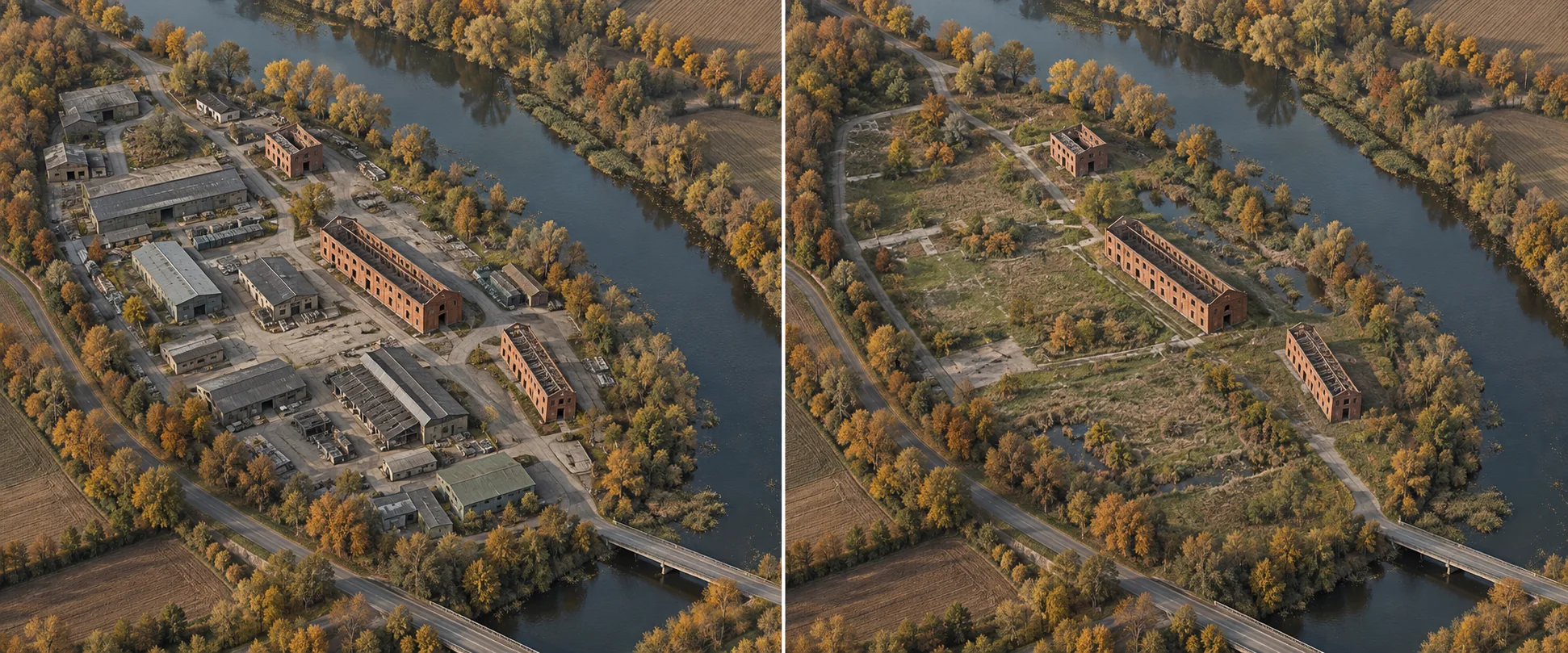
In 2139, roofs extended from the bank to the old road. A narrow watercourse ran between loading yards and walls, hard to follow continuously from ground level. In a working district, doors, vehicle lanes and commuting routes provide orientation. The river passed through the gaps between them.
Closure did not instantly undo those arrangements. Rain followed old drains, contamination in low ground needed attention and machinery still required access. Reusable components were numbered; hazardous materials followed a separate disposal route. Dismantling turned a seemingly fixed city into things that needed destinations.
A second life for three brick shells
By 2149, the river had become the main line in the image. Three brick shells remained in their original positions. One stored equipment; two stayed closed for inspection. They had become supports for the work that remained. Doors and ageing walls still gave someone a reason to return.
A building does not become history the moment its first use ends. The store still participates in the present. The other two, with their closed doors, remind a visitor that quiet appearances do not mean finished work. Past and present continue to overlap on the same walls.
Open space, ongoing work
Grassland and wet ground formed different boundaries. The maintenance corridor followed drier ground. Our named, escorted access kept us on that route, away from flooded low areas and closed shells. The openness of a photograph still contained directions and limits underfoot.
NatureConstruct’s project covers 1.8 square kilometres of retired workshops. It does not stand for a whole city. More visible green cannot substitute for a species census, and this report has no complete biodiversity survey. We can identify waterways and surface forms without answering for measurements never made.
Remembering a place after ten years
Inside a city, new uses often overwrite old addresses. Reserve 9 offers a slower way of reading: locate the river, find the brick shells and imagine how the vanished roofs once fitted between them.
Memory need not preserve everything. It asks us to know what was removed, what remains and who must return because it remains. The river flows and maintenance continues. Ten years after dismantling, someone still needs to be here tomorrow.